Badass Pasta
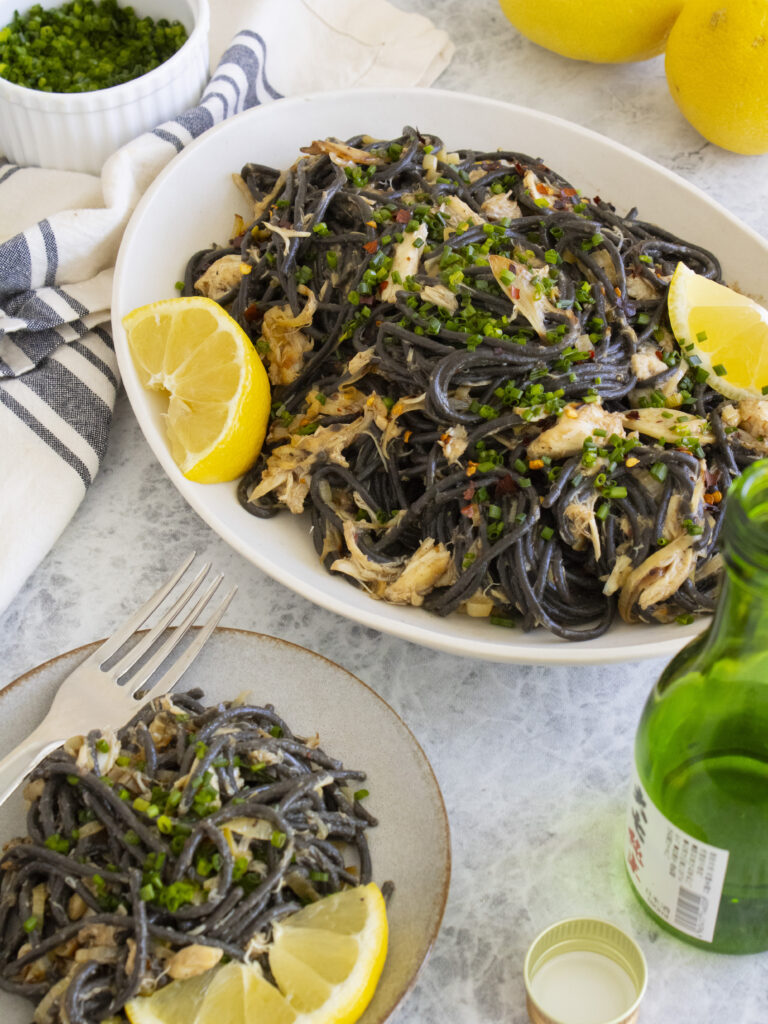
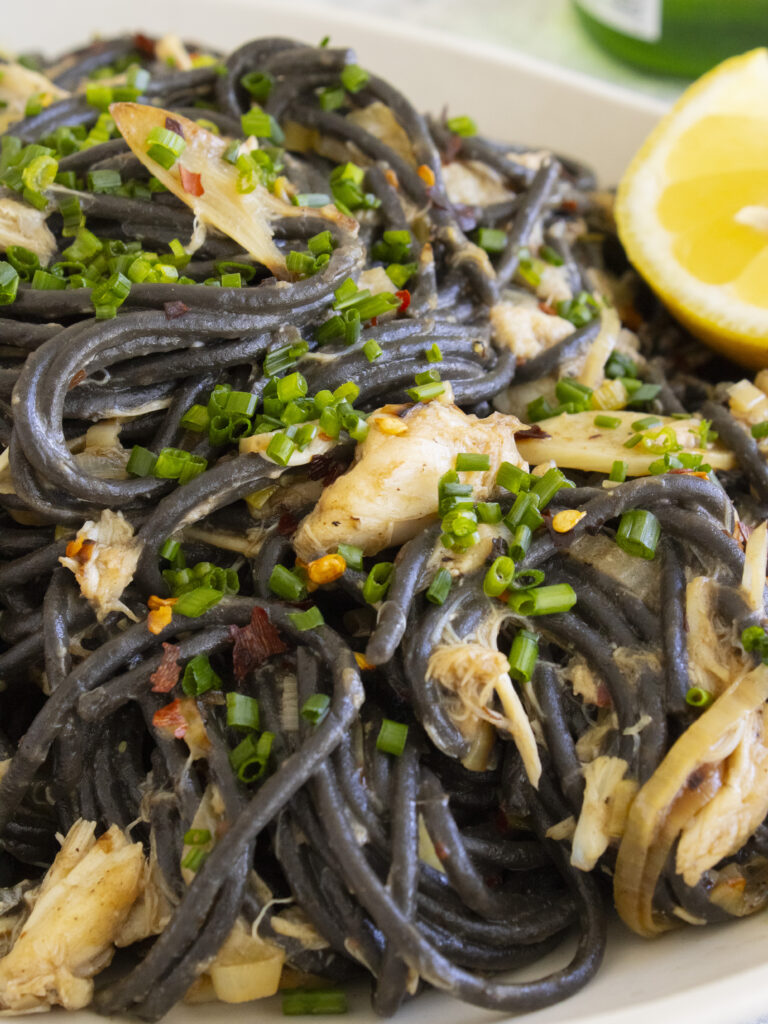
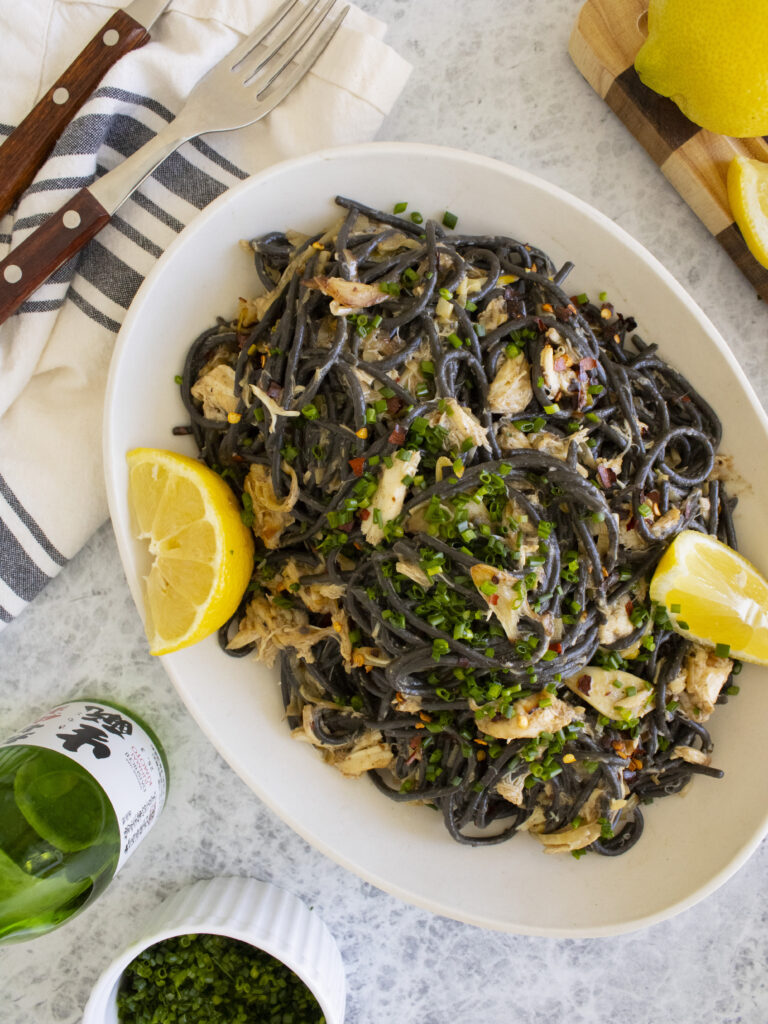
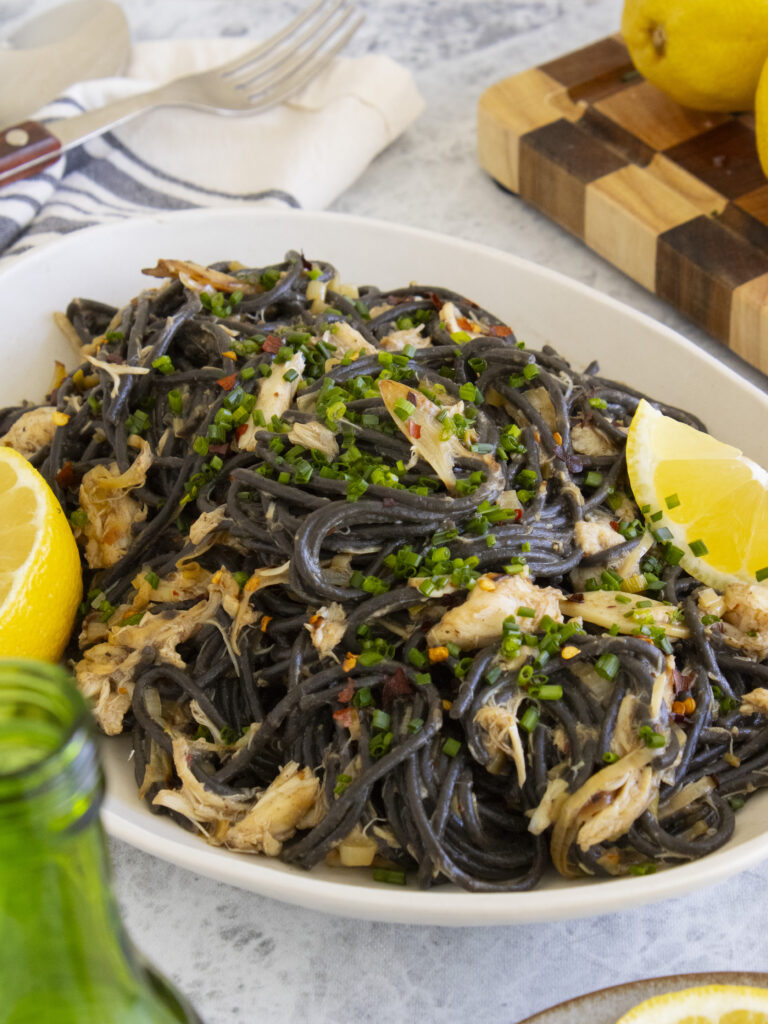
One thing about me is if there’s squid ink pasta on the menu, I’m getting it. Ever since I was a kid, I was fascinated that pasta could come in different flavors and colors. To be honest, I probably just thought squid ink pasta sounded badass and looked cool with its black color. And while that still is true to this day, I now have a more experienced appreciation for it. Squid ink pasta has such a delicious umami flavor. You’ll often see it paired with a red sauce because the acidity from the tomatoes balances and brightens the seafood flavor. I love that combination, but I wanted to make my own version and play into the umami flavors. This Miso Leek Squid Ink Pasta has squid ink pasta tossed in a buttery miso and leek sauce with sweet chunks of crab meat. It’s elevated yet easy to make and the perfect balance of fresh and indulgent!
One Pan Pasta
We’ll start with bringing a pot of water to a boil. Cook the squid ink pasta according to the package directions until al dente. Before draining the pasta, measure out 1¼ cups of the pasta water and set aside. Drain the pasta and rinse under cold water.
Heat a large pan over medium heat. Add in the 3 tablespoons of butter and allow it to melt. Then add in the leeks and garlic. Sauté for 5-7 minutes until the leeks have softened and started to caramelize. Mix in the red pepper flakes and white miso paste. Cook for 1 minute. Pour in the sake. Allow it to bubble and reduce for about 2 minutes. Then add in the juice from half a lemon along with the crab. Give it a mix then pour in 1 cup of the reserved pasta water. Once it comes to a gentle bubble add in the pasta. Gently toss the pasta with the sauce, careful not to break apart the lumps of crab too much. Add in the tablespoon of cold butter and parmesan.
Continue to gently toss the pasta and sauce together until it’s slightly thickened and the pasta has absorbed most of the sauce. Add a splash more pasta water at a time if needed. Remove the pan from heat. Taste for seasoning and add salt, pepper, or more lemon juice if needed. Garnish the top with chives.
Cooking to Impress
This Miso Leek Squid Ink Pasta is not only beautiful, but also delicious. It’s the type of dish that will have people thinking you’re an experienced chef. It truly hits all of the flavor notes while still allowing the squid ink pasta to shine. The miso and sake deepen the umami flavors in a more earthy way. The crabmeat is slightly sweet, and the chives and lemon add a bite of freshness. These ingredients all work together to add and develop the dish’s flavor profile, but they’re also not too overpowering. This Miso Leek Squid Ink Pasta is truly delicious and an easy recipe to whip up when you’re looking to impress!
Miso Leek Squid Ink Pasta

Ingredients
- 8 oz Squid Ink Spaghetti
- 4 tbsp Unsalted Butter
- 1 Leek (trimmed and cut into half-moon slices)
- 3 Garlic Cloves (sliced)
- ½ tsp Red Pepper Flakes
- 3 tbsp White Miso Paste
- ½ cup Sake
- 8 oz Lump Crab Meat
- 1 Lemon
- 1 tbsp Cold Unsalted Butter
- ¼ cup Grated Parmesan
- Chopped Chives (for serving)
Instructions
- Bring a pot of water to a boil. Cook the squid ink pasta according to the package directions until al dente. Before draining the pasta measure out 1¼ cups of the pasta water and set aside. Drain the pasta and rinse under cold water.
- Heat a large pan over medium heat. Add in the 3 tablespoons of butter and allow it to melt. Then add in the leeks and garlic. Sauté for 5-7 minutes until the leeks have softened and started to caramelize.
- Mix in the red pepper flakes and white miso paste. Cook for 1 minute. Pour in the sake. Allow it to bubble and reduce for about 2 minutes. Then add in the juice from half a lemon along with the crab. Give it a mix then pour in 1 cup of the reserved pasta water. Once it comes to a gentle bubble add in the pasta.
- Gently toss the pasta with the sauce, careful not to break apart the lumps of crab too much. Add in the tablespoon of cold butter and parmesan. Continue to gently toss the pasta and sauce together until it's slightly thickened and the past has absorbed most of the sauce. Add a splash more pasta water at a time if needed. Remove the pan from heat. Taste for seasoning and add salt, pepper, or more lemon juice if needed. Garnish the top with chives and enjoy!